Drug&Safety personal medication safety, coming soon

Can I take this medicine?Check your record first.

We check each medicine against your clinician-verified reaction history and current drugs, then show what your record lists as avoid, caution or OK to take.

Digital drug safety cardFictional example

Kim ○○

Culprit drug
Amoxicillin J01CA04
Reaction
Anaphylaxis, severe
ContraindicatedAmoxicillin, amoxicillin with clavulanic acid J01CR02
CautionPenicillin antibiotics, cephalosporin antibiotics
OK to takeThird-generation cephalosporins, fourth-generation cephalosporins
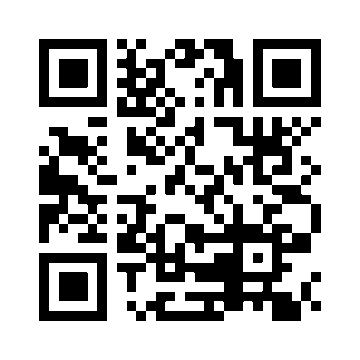
QR code that opens myadr.care

myadr.careScan to open the full record, including causality and severity.

Every new prescription still relies on your memory.

Your body had the reaction, but the record stays with the hospital that saw it. Change hospital or pharmacy and you start explaining from scratch.

  • It breaks when you change hospitals

    A history kept on a paper card or in your head does not follow you to the next hospital or pharmacy.

  • Prescription checks cannot see it

    Korea's national prescription check (DUR) holds no personal drug allergy history.

  • The answer differs from person to person

    With the same painkiller allergy, a drug that is fine for one person can be dangerous for another, so people end up avoiding medicines they need.

A National Health Insurance Service analysis estimated 430,000 patients with adverse drug reactions in 2014 alone, at a socioeconomic cost of 535.2 billion won.

“I often found it a hassle to re-check the drugs I must not take at every prescription and again at the pharmacy. Even after all that checking, I was prescribed the wrong drug and suffered allergic reactions many times.”

Google Play review, November 2020, translated from Korean

“Every time I got a prescription, my antibiotic allergy made me anxious…”

Google Play review, August 2019, translated from Korean

Same medicine, different answers. Try it.

Two fictional patients, both allergic to painkillers. Pick a medicine and see how each record changes the answer.

Check by drug nameDemo with fictional patients

Pick a medicine

SelectedIbuprofenibuprofen · M01AE01
Fictional patient A
Cross-reacts with all NSAIDs
Contraindicated
Your record lists it as contraindicated. Talk to the prescribing doctor before taking it.
Contraindicated group: NSAIDs
Fictional patient B
Reacts only to the diclofenac class
OK to take
The record lists this drug as OK to take.
Registered as OK to take

Same drug, different answers.

Results come only from each patient’s clinician-entered record. A drug that is not on record is never guessed.

What the real app shows

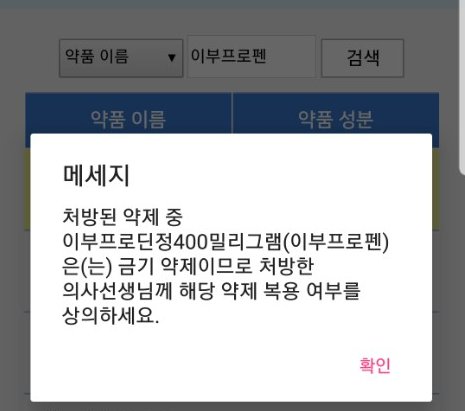
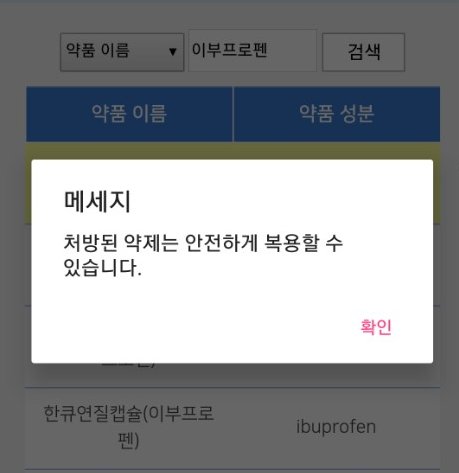
Screens from the Drug Allergy Alert app, released in 2018, searching the same drug, ibuprofen, on demo records.

Real Drug Allergy Alert screen. Message: the prescribed ibuprofen 400 mg tablet is a contraindicated drug, so ask the prescribing doctor whether to take it.
Patient who reacts to all NSAIDsTold it is contraindicated and to ask the prescriber
Real Drug Allergy Alert screen. Message: the prescribed drug can be taken safely.
Patient who reacts only to diclofenacTold it can be taken safely

From record to answer in three steps

  1. 1

    Bring your record together

    We use the reactions confirmed in clinic together with the diagnoses, prescriptions and test results you download from the government’s My Health Record app.

  2. 2

    Rules screen, clinicians confirm

    Explicit rules screen first for contraindications, interactions and drugs that need care in older adults. AI drafts the plain-language wording, and the process is designed for a clinician to review and approve it.

  3. 3

    Get your card and guide

    Receive your QR drug safety card and medication guide in an app, by KakaoTalk message or as a PDF. At a pharmacy or hospital, just show the QR.

Four things you keep

Each was built and used with patients in research the founder led. We are now bringing them together as one service.

Digital drug safety card · My ADR

One QR code lets you show your record at a new hospital.

  • The front shows the culprit drug, the reaction, and what is contraindicated, needs caution or is OK to take, in traffic-light colors.
  • The QR code opens the full record: onset date, severity, causality and confirmatory tests.
  • Depending on the hospital, you receive it as a plastic card, in an app or by KakaoTalk message.
  • It is mapped to the HL7 FHIR international standard so that hospitals can exchange the record.
Research
9 university hospitals, 709 patients registered by December 2024. After the project ended, 372 more registered at 5 hospitals by April 2025.
Built by
Ministry of Food and Drug Safety R&D (2022-2024), led by Chungbuk National University Hospital, with Kakao Healthcare
  1. A clinician enters the confirmed reaction in a standard format.
  2. The record becomes a card that lists contraindicated, caution and OK-to-take drugs, with a QR code.
  3. At a new hospital or pharmacy, scanning the QR opens the full record.
  4. Depending on the hospital, it comes as a plastic card, in an app or by KakaoTalk message, and can be passed on as a FHIR file when needed.

Illustration with a fictional patient

Drug Allergy Alert · Android app

Before you pick up a medicine, check it against your record.

  • Search a drug or ingredient name and see contraindicated, caution or OK to take, based on your record.
  • Scan the 2D code printed at the bottom of a prescription to check every prescribed drug against your record at once. If a code is not recognized, the app asks you to search by name.
  • If a drug is contraindicated, the app tells you to talk to the prescribing doctor.
  • An action plan spells out what to do, such as “avoid NSAIDs, including patches and eye drops”.
In use
Google Play rating 5.0 from 87 reviews, 1,000+ downloads (checked October 2026; last updated November 2023). Grand prize in health and medicine, Smart App Awards Korea 2018.
Built by
Ministry of Health and Welfare patient safety research (2017-2018), co-developed by Chungbuk National University Hospital and Chungbuk National University; prescription code reading with UBcare and EDB

The app is for patients whose allergy record has been entered by their clinician.

  1. Your allergy record, entered by your clinician, is in the app.
  2. Search a drug name and the app answers contraindicated, caution or OK to take, based on your record.
  3. Scan the 2D code at the bottom of a prescription to check every prescribed drug at once.

Only the screen marked “Real screen” is the 2018 app (demo record); the rest illustrates fictional patient A.

MyData medication guide · SMART DUR CDSS

Medicines from several hospitals, sorted onto one page.

  • It starts from your diagnoses, the last 12 months of prescriptions, and test and checkup results downloaded from My Health Record.
  • Clinicians also review how regularly each medicine was refilled over the past year (PDC).
  • For each medicine it explains in plain words why you take it, what to watch for, and which symptoms mean you should talk to your doctor.
  • Guides are designed to reach the patient only after a clinician has reviewed and approved them.
  1. It starts from the diagnoses, 12 months of prescriptions and test results downloaded from My Health Record.
  2. Explicit rules first check interactions, older-adult cautions, anticholinergic burden and STOPP/START.
  3. AI drafts a plain-language guide from those results.
  4. The guide is designed to reach the patient only after a clinician reviews and approves it.

Illustration with a fictional patient

Checks run before the guide is written

Drug interactionsEach pair of current medicines, checked against DrugBank
Older-adult cautions, fall-risk drugsKorean geriatric DUR and the Beers criteria
Anticholinergic burdenAlternatives suggested to the clinician for high-burden drugs
STOPP/START version 3146 rule entries coded by diagnosis (ICD-10) and drug (ATC)

What the guide covers

  1. Each current medicine
  2. Drugs that need special care
  3. Drugs to take steadily
  4. Combinations to watch
  5. Symptoms to look out for
  6. Summary and advice

Example: warfarin with ibuprofen goes under “combinations to watch”, because the pair can raise the risk of bleeding.

Field test
Field-tested at 3 hospitals in 2025 (project year 3). The abstract the research team submitted to a conference reports 111 patients enrolled and 108 reports delivered.
Built by
Ministry of Health and Welfare Healthcare MyData R&D (2023-2025), led by Chungbuk National University Hospital, with Kangbuk Samsung Hospital and NHIS Ilsan Hospital as field sites

Personal drug allergy guide · SDAP

Leave with the words to use at the pharmacy and the ER.

  • Drug classes are sorted into contraindicated, caution and OK to take, each with the reason.
  • Explanations are written in plain words for your age, sex and other conditions.
  • Each class comes with at least three answers to questions such as “What do I tell the pharmacist?” and “What can I take instead?”
  • It is designed to go out as a PDF with a QR card only after an allergist has reviewed and approved it.
Pilot
Guides were produced for all 40 patients in an allergy clinic pilot at Chungbuk National University Hospital. Single-center pilot, patient-reported on a 5-point scale: understanding of their own allergy 4.6, confidence managing their medicines 4.4, confidence telling clinicians about their allergy 4.5 (poster abstract submitted to a 2026 congress).
Built by
The founder’s research team at Chungbuk National University Hospital. The code is public on GitHub.

Inside the guide

ContraindicatedThe culprit and cross-reactive classes, and why to avoid them
CautionClasses that need premedication or a clinician’s decision
OK to takeAlternatives you can use
What do I say at the pharmacy?“I had anaphylaxis to amoxicillin. Please check whether this contains a penicillin.”Example sentence for the fictional patient Kim ○○.

Yakirang · patient app

Your card and guides live in one app.

A patient Android app built in the Ministry of Health and Welfare MyData research.

Google Play, 100+ downloads, listed developer Huray Healthcare (checked October 2026)

  • Prescriptions by hospital and date, with the dose, times per day and total days for each drug
  • A table showing any contraindicated or caution ingredients in your prescriptions
  • Personal medication guidance kept by date, and a weekly medication calendar
  • A log of symptoms after taking a drug, with intensity from 1 to 10 and the day it started
  1. Your personal medication guidance collects in the app, by date.
  2. Prescriptions show each drug’s dose and schedule, and flag any contraindicated or caution ingredients.
  3. Symptoms after a dose are logged with intensity from 1 to 10 and the day they started.
  4. A weekly calendar helps you keep track day by day.

Illustration with a fictional patient

AI never decides alone whether you can take a drug.

The starting point is your clinician-verified record and explicit rules. AI drafts the plain-language wording, and the text that reaches you is designed to be reviewed and approved by a clinician.

  1. Your recordReactions, diagnoses, prescriptions
  2. Rule engineInteractions, older-adult cautions, STOPP/START
  3. AI draftFindings in plain words
  4. Clinician approvalReviewed, edited, approved
  5. To youApp, KakaoTalk, PDF
  • No guessing beyond your record

    The system is designed to work from the registered contraindicated, caution and OK-to-take lists. If a drug is not on record, it says so and asks you to check with your care team.

  • Designed for clinician approval

    AI drafts are designed to be reviewed and edited by a clinician before they reach you.

  • Your record stays yours

    You can show the QR card at any hospital or pharmacy and, when needed, pass the record to clinicians in HL7 FHIR format. The sharing standard was adopted for a Ministry of Health and Welfare pilot program.

Drugs are coded with ATC and KD codes, reactions with MedDRA and severity with CTCAE.

Research went first

These figures come from project reports, a conference abstract and Google Play. Each result belongs to Chungbuk National University Hospital and the other institutions that did the work. The drug allergy information exchange pilot was led by a Seoul National University Hospital consortium, with the founder as a co-investigator.

709

patients registered on the digital drug safety card platform at 9 university hospitals (December 2024)

914

expert-reviewed drug allergy records shared among 3 hospitals in the first national exchange pilot, led by a Seoul National University Hospital consortium; the second pilot widened to 8 hospitals

4.6

out of 5: how well 40 patients in a single-center pilot said they understood their own drug allergy after receiving the guide

5.0

Google Play rating of Drug Allergy Alert, from 87 reviews

3

hospitals that field-tested guides built from patients’ own downloaded records (2025)

In users’ words

“I no longer have to write it down, memorize it and explain it at every hospital. It’s great.”

★★★★★Google Play, March 2022

“I can search drugs, and scanning the prescription shows whether a forbidden drug was prescribed.”

★★★★★Google Play, July 2021

“It tells me the drugs I must not use and even similar classes. Above all, it is simple to use.”

★★★★★Google Play, May 2023

Excerpts from Drug Allergy Alert user reviews, translated from Korean.

Awards

  • 2018Smart App Awards Korea, grand prize in health and medicineDrug Allergy Alert
  • 2022Minister of Health and Welfare CommendationStandard model for sharing drug allergy information
  • 2023Excellence award, health information exchange best-practice contestSharing drug allergy information through the national exchange system
  • 2024Korean Society for Patient Safety, Society President’s AwardDigital drug safety card, CBNUH Regional Pharmacovigilance Center

Awards to the founder or the Chungbuk National University Hospital research team.

6 granted patents

Granted patents with the founder as inventor: five in Korea and one in the United States. Applicants include Chungbuk National University Hospital. English titles of Korean patents are translations.

  • Information processing server and method for providing a patient-customized safe medication serviceKR 10-2982457 · 2026
  • Apparatus and method for estimating personalized probability of drug side effectsUS 12,394,529 · 2025
  • Method and apparatus for probability-based estimation of adverse drug reactions (divisional)KR 10-2706000 · 2024
  • Method and apparatus for determining personalized probability of adverse drug reactionsKR 10-2656669 · 2024
  • Method and apparatus for detecting adverse drugs and providing optimized medication using personalized dataKR 10-2609482 · 2023
  • Method for evaluating drug allergy risk based on ingredient nameKR 10-2198829 · 2020

It started in the clinic

Prof. Mingyu Kang in a white coat

Mingyu Kang

Founder and CEO of Rapport; Associate Professor, Chungbuk National University College of Medicine

Associate Professor in the Department of Internal Medicine at Chungbuk National University College of Medicine and an allergist at Chungbuk National University Hospital, where he has practiced since 2015. He is board-certified in allergy and clinical immunology and certified in medical informatics, and has directed the hospital’s Regional Pharmacovigilance Center and its Medical Information Center.

He founded Rapport in November 2021 to turn the research into a service patients actually use. In medicine, rapport is the trust between a patient and the people who care for them.

Since March 2026 he has been a Visiting Researcher at CAMCA in the Department of Radiology at Harvard Medical School and Massachusetts General Hospital, studying how medical AI can work with the record a patient carries.

Company
Rapport
CEO
Mingyu Kang
Founded
November 2021, faculty startup
Address
931, West Wing 9F, 776 1sunhwan-ro, Seowon-gu, Cheongju-si, Chungcheongbuk-do, Republic of Korea

Research since 2017

  1. Personalized DUR in Your HandsMinistry of Health and Welfare patient safety research. Drug Allergy Alert launched in 2018.
  2. MyData-based reaction preventionNational Research Foundation of Korea
  3. Rapport foundedFaculty startup
  4. Digital drug safety card and My ADRMinistry of Food and Drug Safety R&D, 9 university hospitals
  5. MyData medication safety CDSSMinistry of Health and Welfare R&D, field-tested at 3 hospitals; co-investigator in the national drug allergy information exchange pilot at the same time
  6. SDAP personal allergy guidePilot with 40 allergy clinic patients; code published

Five representative projects the founder led as principal investigator (2017-2025), listed on the faculty homepage, received 2.775 billion won in total, including partner institutions. All projects and papers

Questions

Can I use it now?

The apps and platform from the research have been used by patients at the participating hospitals. Drug Allergy Alert is on Google Play, and the digital drug safety card was issued at hospitals in the research. The combined Drug&Safety service, open to anyone, is being prepared. Join the waitlist and you will hear first.

What do I get by joining the waitlist?

We will email you when the service opens and how to use it. Joining is free.

Who enters my allergy information?

Clinicians register the contraindicated, caution and OK-to-take drugs confirmed in clinic. Your current medicines and diagnoses come from the record you download yourself from My Health Record.

Does AI decide whether I can take a drug?

No. AI does not decide whether you can take a drug. The starting point is the record your clinician registered and explicit rules, and AI drafts the plain-language text. In the allergy guide AI also drafts the grouping of drug classes, so the guide is designed to go out only after a clinician has reviewed and approved it. The system is designed not to guess anything that is not on record.

Can other hospitals and pharmacies see it?

Scanning the QR code on your card opens the detailed record your clinician registered. When needed, the record can be passed to clinicians in the HL7 FHIR international format.

Does it work abroad?

In a research demo we tested showing the card in English and Chinese to clinicians abroad. We will tell waitlist members when it becomes part of the service.

How is my personal information handled?

The waitlist asks for your email address, plus the role, interests and optional name you choose to fill in, and uses them only for waitlist updates. Please do not send medical records or prescription photos.

How can a hospital or pharmacy adopt it?

Choose “clinician or institution” on the waitlist form or email us. In the research, hospitals piloted sending the standard sharing form from their medical records to the platform through an API.

Are the patients and records on this page real?

All patients and records in the demo and the card are fictional examples. Images marked as real screens show 2018 demo records and contain no identifying information. This page does not provide medical advice. Talk to your care team before making decisions about medication.

A drug reaction should never happen twice.

We will tell you first when Drug&Safety opens. Joining the waitlist is free and takes a minute.

  • Hear by email when the service opens and how to use it
  • Clinicians and institutions can talk with us about adoption and joint research
  • We ask only for your email address, who you are, and the optional items you fill in (name, interests)
I am
Interested in (choose any)

Used only for waitlist updates.

The button opens your mail app with the details filled in. Your request is sent when you press Send there.

Or email us directly mingyukang@drugnsafety.com

Please do not send medical records or prescription photos.